1. Pollution
a. Air
b. Water
c. Soil
2. Natural resources
a.running out
b.being degraded
3. Population growth outstripping resources worldwide
4. Unequal distribution of financial resources
5. The overwhelming power of multinational corporations over governments
6. Nuclear weapons; the imminent danger of worldwide catastrophe
7. Military means and thinking as a way of resolving political problems
8. Genocides in Africa, Indo-China, Tibet, Europe, North America
9. Racism, sexism, hatred of homosexuals, anti-Semitism
10. Rising expectations in third world countries
11. Fundamentalism and narrowness, exclusivism, particularism, terrorism
12. Ethnic groups clinging to land, to resources, to sacred space

Major Problems in INDIA
1. Low level of national & per ca-pita income
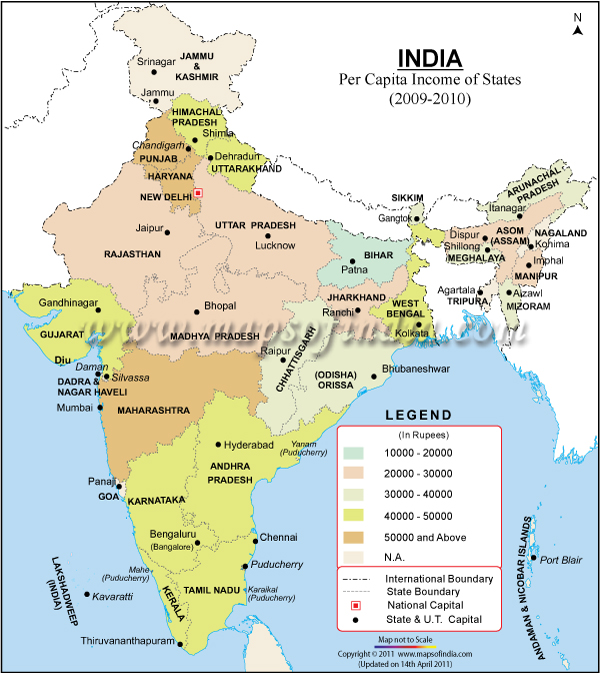
India's per capita income (nominal) was $1,570 in 2013, ranked at 112th out of 164 countries by the World Bank while its per capita income on purchasing power parity (PPP) basis was US$5,350, and ranked 106th. Other estimates for per capita Gross National Income and Gross Domestic Product vary by source. For example, India's average GDP per capita on PPP basis in 2009, according to The Economist, was US$5,138, with significant variation among its states and union territories. Go had the highest per capita PPP GDP at US$4903, while Bihar the lowest with per capita PPP GDP of US$682 as of 2015 In rupee terms, India's Per capita income grew by 10.4% to reach Rs.74,920 in 2013-14.
While India's per capita incomes were low, the average household size and consequent household incomes were higher. India had a total of 247 million households in 2011, with an average of about 4.9 people per household, according to Census of India.
Estimates for average household income and the size of India's middle income households vary by source. Using World Bank's definition of middle income families to be those with per capita income between $10 to $50 per day, the National Council of Applied Economic Research of India completed a survey and concluded there were 153 million people who belonged to middle income group in 2006. In contrast, Meyer and Birdsall and Tim Light used a different survey and estimated the number of Middle Income population to be about 70 million in 2009-2010.These groups as well as the World Bank estimated in their 2011 reports that if India's economy continues to grow per projections, India's middle income group would double by 2015 over 2010 levels, and grow by an additional 500 million people by 2025. This would make it, with China, the world's largest middle income market.
2. Vast inequalities in income and wealth:

India is suddenly in the news for all the wrong reasons. It is now hitting the headlines as one of the most unequal countries in the world, whether one measures inequality on the basis of income or wealth.So how unequal is India? As the economist Branko Milanovic says: “The question is simple, the answer is not.” Based on the new India Human Development Survey (IHDS), which provides data on income inequality for the first time, India scores a level of income equality lower than Russia, the United States, China and Brazil, and more egalitarian than only South Africa. According to a report by the Johannesburg-based company New World Wealth, India is the second-most unequal country globally, with millionaires controlling 54% of its wealth. With a total individual wealth of $5,600 billion, it’s among the 10 richest countries in the world – and yet the average Indian is relatively poor.Compare this with Japan, the most equal country in the world, where according to the report millionaires control only 22% of total wealth.In India, the richest 1% own 53% of the country’s wealth, according to the latest data from Credit Suisse. The richest 5% own 68.6%, while the top 10% have 76.3%. At the other end of the pyramid, the poorer half jostles for a mere 4.1% of national wealth.What’s more, things are getting better for the rich. The Credit Suisse data shows that India’s richest 1% owned just 36.8% of the country’s wealth in 2000, while the share of the top 10% was 65.9%. Since then they have steadily increased their share of the pie. The share of the top 1% now exceeds 50%.This is far ahead of the United States, where the richest 1% own 37.3% of total wealth. But India’s finest still have a long way to go before they match Russia, where the top 1% own a stupendous 70.3% of the country’s wealth.
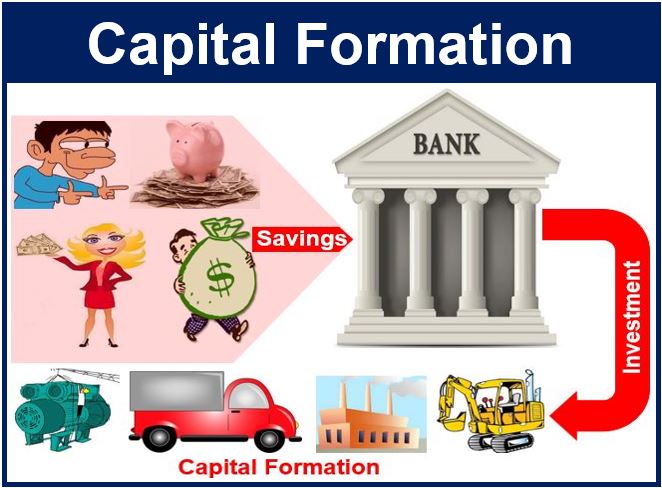
3. Scarcity of capital and low rate of capital formation:
Reasons
a. Low Level of National Income and Per Capita Income
b.
Lack in Supply of Capital
c. Lack in Supply of Capital
d. Small Size of Markete. Lack of Skilled Entrepreneursf. Immobility of Savingsg. Backwardness of Technologyh. Demonstration Effecti. Lack of Effective Fiscal Policy
j. Lack of Investment Incentives
4. Underdeveloped infrastructure
 Being an LDC, India’s infrastructural facilities or economic and social overheads of capital are inadequate. It consists of (a) transport and communications, (b) energy, (c) finance, housing and insurance, (d) science and technology, and (e) health, education, etc.Availability of these infrastructures creates the conditions for favourable growth. The superstructure of an economy largely depends on the availability of infrastructural facilities.As far as social and economic overheads are concerned, India is poor. It is indeed true that her railway and road networks are comparable to the developed nations. But her demand for infrastructural facilities and services outpace their supplies. Per capita energy use (oil equivalent) of an Indian in 2004 was 531 kg vis-a-vis USA’s 7,921 kg. Even China’s per capita energy use was higher (1,242 kg.) than India’s.Compared to other countries, India is poor in information technology. In 2005, the use of personal computers per 1,000 Indians was as low as 16 as against 762 per 1,000 US people. India’s health expenditure as a percentage of GDP was 1.39 p.c. in 2007-8 over the USA’s 15 p.c. of GDP.
Major Problems in Nepal
1. Poverty
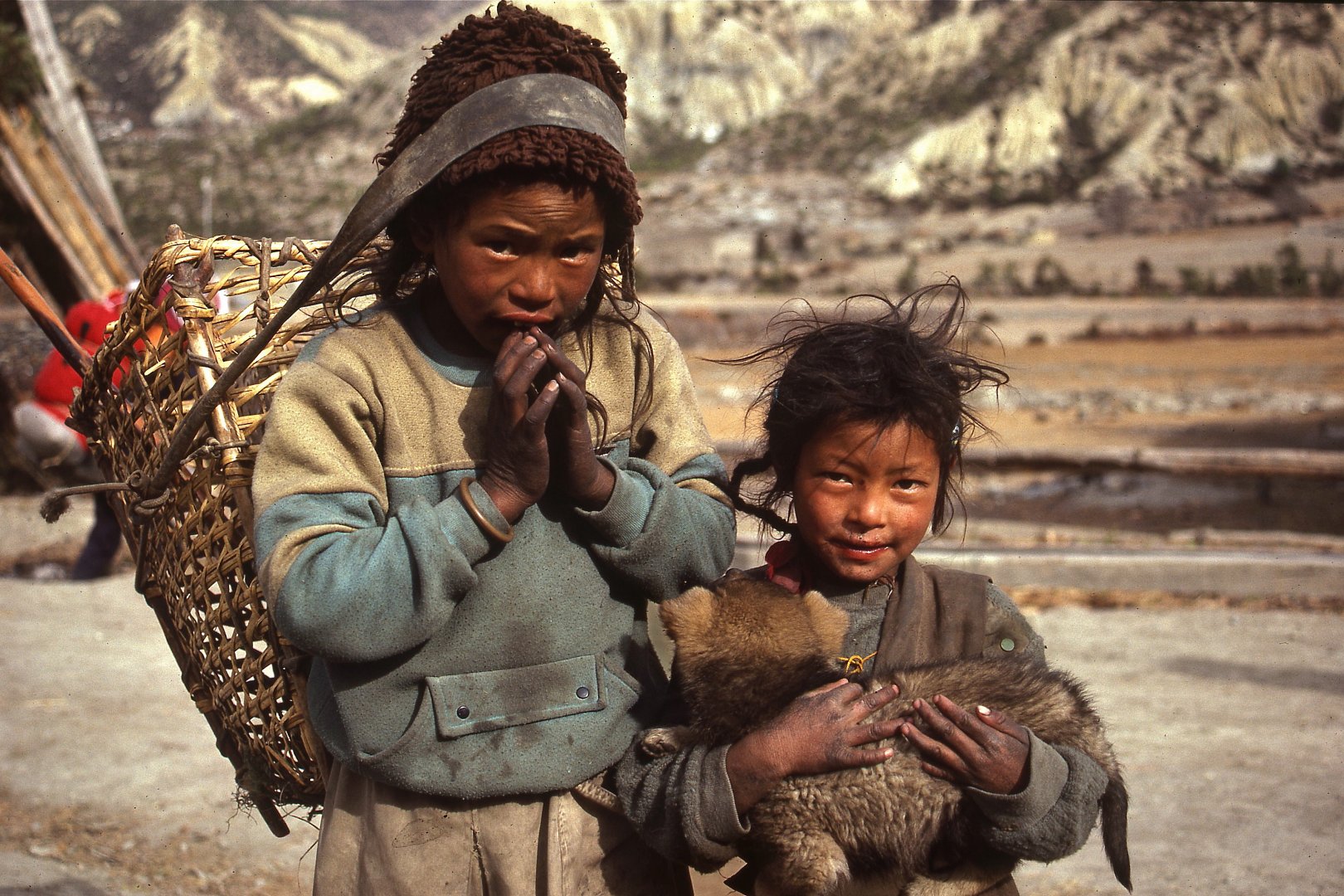 Get the latest statistical data on poverty and socioeconomic development in Nepal and compare poverty indicators among countries in South Asia.
In Nepal, 25.2% of the population lives below the national poverty line.
In Nepal, the proportion of employed population below $1.90 purchasing power parity a day is 12.5%.For every 1,000 babies born in Nepal, 29 die before their first birthday.
Nepal is among the world’s poorest countries. Poverty in this small nation is not only persistent, but is widespread. According to the 2010 Nepal Living Standards Survey, conducted by the Central Bureau of Statistics and the World Bank, 25.2% of the country’s population lives below the poverty line.
Moreover, the World Bank reported that everyone in Nepal, leaving a handful of professionals, businessman and large farmers, is poor. Today, more than 9 million people in the country are projected to be living on an income of less than $1 a day
2. Underdevelopment
3. Unemployment
 The population who are temporarily without job are called Unemployment.Unemployment refers to the state of being unemployed.If the people do not get apt job to be employed,it is called as the problem of unemployment. Nowadays this burning population has emerged as a complex challenge in Nepal.
The problem of unemployment invites many problem and social disasters.If people do not get any thing to live on, they are likely to involve in crimes such as robbery, thief etc.We can see that unemployed youth starts taking drugs and drinking.In some serious conditions, completely unemployed people are likely to commit suicide.The pace of development gets slower because unemployed people cannot educate their children.By the result, the future of them can led to misery and ruins.
In order to solve the problem of unemployment, the opportunities and facilities of technical education should be decentralized.Youth should be encourage to get technical education.In rural areas, the government is obliged to encourage the people to establish cottage industries.Unemployment problem should be removed fast though it took long time but for the development of nation this problem should be solved as soon as possible.
4. Malnutrition
Malnutrition increases the risk of mortality in the early stages of infancy and childhood, impairs cognitive function of those who survive and hinders efforts to enhance national, social and economic development goals and the attainment of Millennium Development Goals (MDGs) 1-6. Poor feeding and care practices, insufficient nutrient intake, high rate of infection and teenage pregnancy are the immediate causes of chronic malnutrition in Nepal.
The Government of Nepal does realize that the issue of malnutrition must be addressed as a priority as it has negative impact on economic development and on the human population. To address the issue the government developed a National Multi-sector Nutrition Plan for improving maternal and child nutrition and reducing chronic malnutrition. The National Multi-sector Nutrition Plan (MSNP) was developed in 2012 jointly with the Ministry of Agriculture and Development, Ministry of Education, Ministry of Federal Affairs and Local Development, Ministry of Health and Population and the Ministry of Urban Development.
This involved a series of consultative meetings involving the National Nutrition and Food Security Steering Committee and Coordination Committee members, government line agencies, technical working groups, sector reference groups, experts and consultants, and representatives from various development partners including donors and civil society organizations.
This Nutrition plan offers a package of a set of focused interventions to attain priority strategic objectives and has been prepared by five government sectors, and is led by the National Planning Commission (NPC), in collaboration with their development partners. It offers a package of activities and interventions with prioritized strategic objectives which, over a period of five years, should contribute to a one third reduction of the current prevalent rates of chronic malnutrition. This will enable the country to significantly reduce this problem within the next ten years and ensure that malnutrition no longer becomes an impediment to improving Nepal's human and socio-economic development.
5. Political problems
The security forces of Nepal are controlled by the Monarchy but due to some of its undemocratic moves it has created strife in democratic forces and this in turn has prompted republicanism. Due to this popular support for the monarchy is declining and political activists have already taken to the streets to revolt against the monarchy. The main political party that has launched a People’s War against the monarchy is the Maoist party of Nepal. This party embarks to get rid of monarchy and seeks to instill the fundamentals of communism in the country.
The Maoists are the main people who are in total control of the countryside of Nepal. This political party, however, over the years, have failed to gain public support because of the shocking brutality of their political actions. They are violent and their strike that shut down all the country are unwise and weaken the nepalese economy. This resulted in both national and international condemnation upon the rebels. After the latest ceasefire, the Maoists are now distancing themselves from their extremely violent actions of the past years. Though they may have reduced the shocking brutal activities of the past years the word, “terror” still remains central in the Maoist rebel’s ideology.
 Girls trafficking is literally defined as the buying and selling of girls illegally. It is a major social crime in Nepal. It has been spread rapidly in remote areas where people are uneducated, ignorant and poor. Girls traffickers in Nepal are reported to sell the girls in India.
Girl trafficking in Nepal seems to be a challenging problem. Girl traffickers have made a complex network to supply the girls. They go to the remote areas pretending to be social workers, teachers, officials,etc. They try to influence the illiterate people. They lure the people in many ways. Some young girl traffickers pretend to be unmarried and propose the girls to get married. The innocent and ignorant people believe in their words. Similarly, some girl traffickers lure the girls by pretending that they would provide them good jobs in India. Then, they take the girls to India and sell them for the purpose of prostitution. The innocent girls are compelled to accept it. If they deny it, they are badly punished and tortured. Girls trafficking is primarily attributed to ignorance, lack of public awareness, illiteracy, poverty, unemployment and intricate network of smuggling and girls trafficking.
Girls trafficking in Nepal has stigmatized our dignity. This social crime invites many social disasters, and ruins. Nowadays, a fatal disease, AIDS has been spread rapidly becuse of girls trafficking , too. The girls who are sold in prostitution houses come back to Nepal being HIV infected. They pass on HIV to other youths in Nepal. Some girls who are victimized by HIV and other fatal disease are likely to commit suicide. Our country is compelled to invest more money to cure the HIV infected youths. Girls trafficking results the entire violation of human rights. Therefore, girls trafficking adversely affects the prosperity of human civilization. 6. Drug Peddling

Hence, a nationwide survey to find out the real number of drug addicts is necessary. Our study shows that more than 90 percent of the total drug addicts in Nepal have started using drugs prior to the age of 16. The large numbers of drug addicts have been found to be between the ages of 16 to 20.The abuse of drugs has led not only to drug addiction but also to the incidence of HIV/AIDS, hepatitis B, and other sexually transmitted diseases (STDs). Heroin addicts and other intravenous drug users (IDUs) have been found to be more vulnerable to contracting these diseases. Among 60 thousand drug abusers, the number of IDUs is estimated to be 20 thousand. Sixty eight percent of these IDUs are HIV positive and most of them are multidrug abusers.
Among IDUs, alcohol use is often associated with unprotected sex. Consumption of alcohol and marijuana boost sexual activity and reduce the use of condom. Before 1996, there were no reports or records of HIV-positive cases in Nepal, but by the end of the same year, nine HIV-positive cases had been detected. In early 2003, 1,940 HIV-positive and AIDS cases were recorded. Among the known cases, 213 are IDUs (source: Department of Health Services). The attitude and behavior of drug abusers are conducive to the spread of these dreaded diseases. IDUs share needles and hence the transmission of HIV from one person to another is rapid. This situation demands thorough research on the problem of drug addiction and its supply to recommend effective measures to counter the problem.
7. HIV/AIDs
HIV in Nepal is extremely heterogeneous, with respect to the most‐at‐risk populations (MARPs), geographic distribution, and risk factors in different geographic regions. The epidemic is concentrated in key populations such as sex workers, injecting drug users (IDUs), men who have sex with men (MSM), and some migrants. Effective prevention interventions need to be scaled up among MARPs and their direct sexual partners. Nepal's poverty, political instability and gender inequality, combined with low levels of education and literacy make the task challenging, as do the denial, stigma, and discrimination that surround HIV and AIDS.
Subscribe to:
Posts (Atom)
-
1. Low level of national & per ca-pita income India's per capita income (nominal) was $1,570 in 2013, ranked at...
-
12 Main Problems in the World 1. Pollution a. Air b. Water c. S oil ads 2. Natura...
-
1. Poverty Get the latest statistical data on poverty and socioeconomic development in Nepal and compare poverty indicators amon...

